

Fini
Timeline
February – August 2023
My Role
UX Design/ Research
Team Members
Amy and Nick
Software
Figma and Trello
Overview
Overview
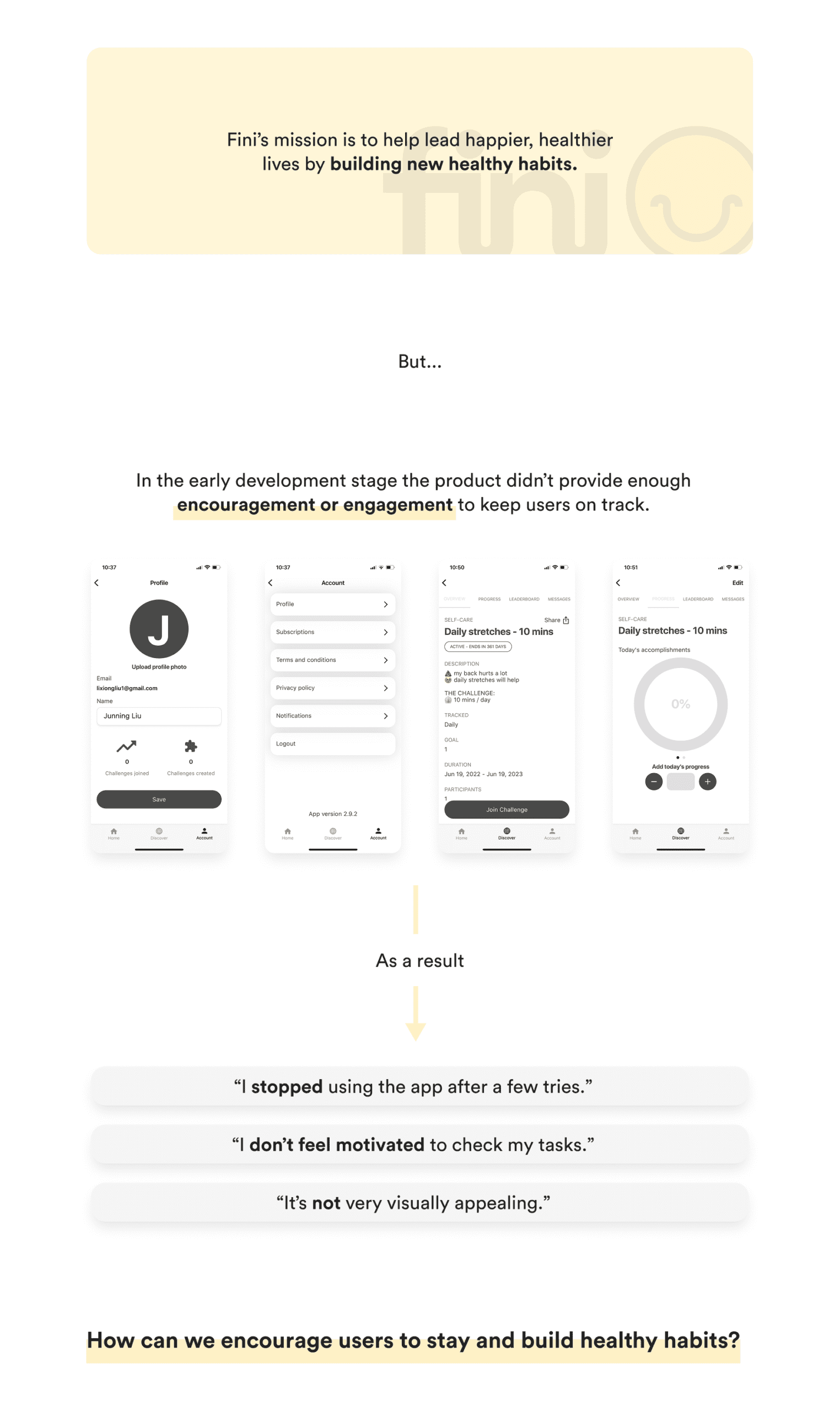
- The project is in the early development phase, we discovered that many users struggled to stay consistent with their goals and lacked motivation to complete tasks. Fini’s app didn’t provide enough encouragement or engagement to keep users on track.
- The project also faced challenges due to a lack of efficiency in cross-functional collaboration, resulting in inconsistent design decisions.
Solution
We designed Fini, a goal-tracking app that helps users stay motivated and consistent in achieving their personal goals. Fini combines progress tracking, gamification features, and an accountability partner system to make goal completion more engaging and rewarding. The app also fosters a sense of community by connecting users with mentors and peers, allowing them to share progress, support one another, and grow together through shared challenges.
Built a Stronger Sense of Community
Redesigned the Profile Page with personalization options like profile pictures, banners, and event highlights.
We added Accomplishments to celebrate user progress and social features such as shared activities and events to foster collaboration. A feedback option in Settings also allows users to shape the community experience.
Improved User Engagement And Encourage Consistent App Usage
We introduced a Progress Tracking feature that allows users to set and monitor their goals.
We also added gamification elements, such as Streaks, to motivate users to check in daily and make goal tracking a natural part of their routine.
Improved Cross-team Efficiency And Design Consistency
We developed a design system with reusable components that could be shared across the design, branding, and development teams.
We also established clear usage guidelines to ensure alignment and maintain brand integrity, no matter which team was working on a feature.
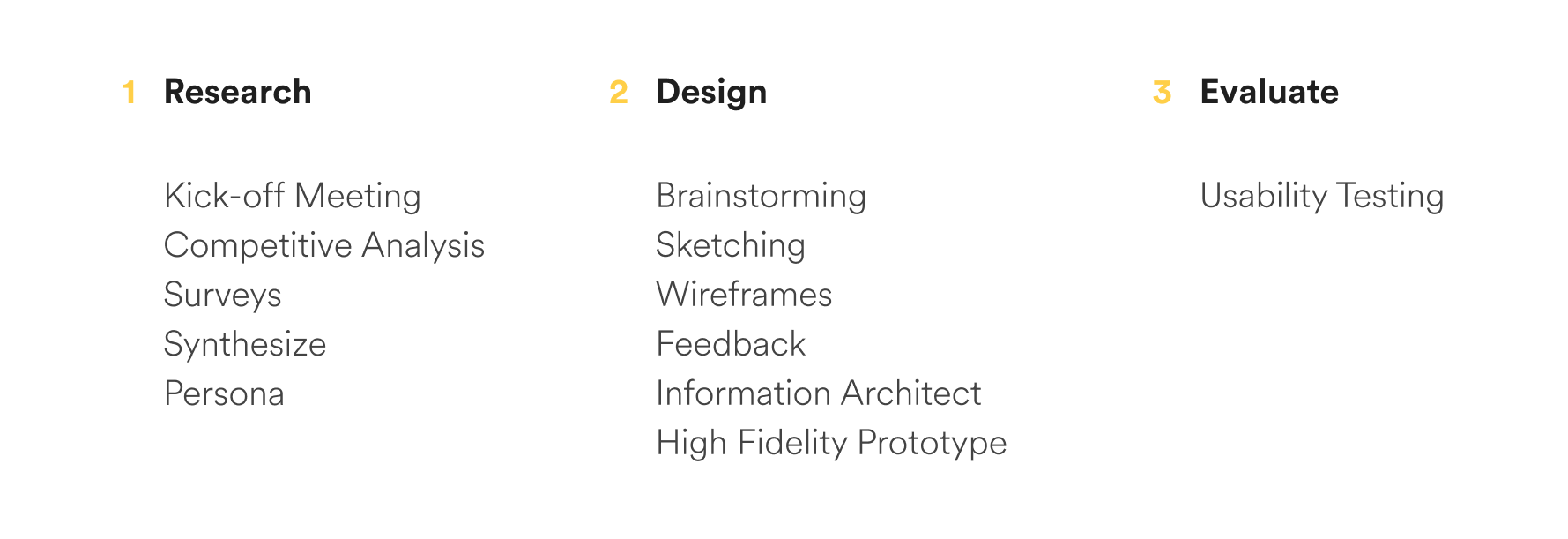
Our Approach
My Contribution
During the research phase, I created and distributed surveys to our current app users, gathering 40 responses. I analyzed the data in a spreadsheet, identified key pain points, and presented the findings to our team.
During ideation, I advocated for focusing on the community aspect of the app and improving retention. Three of my ideas were incorporated into the final concept and handoff to development. I then facilitated a critique session with both the design and engineering teams, collected additional user feedback through surveys, and used these insights to finalize the prototype.
I was also responsible for designing the user profile page, settings screen, progress tracking, gamification features, and redesigning the company design system. Finally, I moderated usability testing, presented the final prototype to stakeholders, and handed off the project to the development team.
Research
Initial research and finding
Market Research: To better understand the problem space, we conducted market research and competitive analysis, focusing on engaging features such as gamification and activity tracking systems.
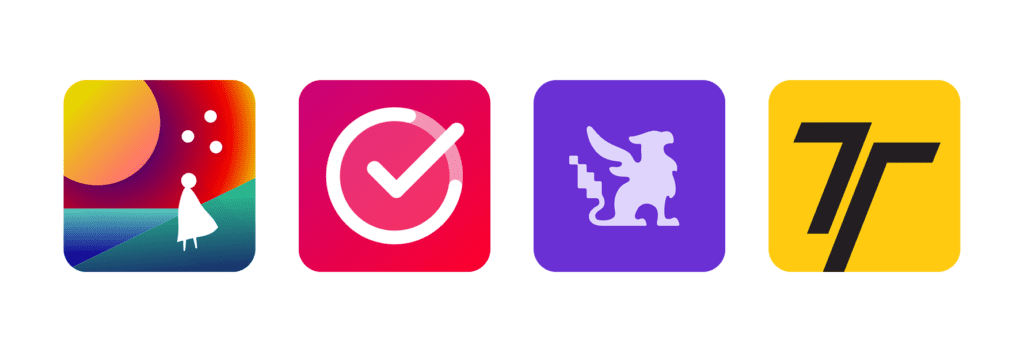
Our main findings include:
- Fitness apps emphasize tracking user activities and progress through robust tracking systems.
- Most competitor apps include gamification features that keep users engaged.
- A sense of community is an important engagement factor.
When comparing these insights with the current state of our app, we realized the need to better understand our users’ needs. This motivated us to gather additional user feedback to learn more about how our current users interact with the product and what features would enhance their experience.
Survey
We conducted a survey with 40 current app users to better understand our target audience and gather feedback. Based on our findings, 80% of our users are dissatisfy with the current phase of the app.
- Reframing Our User Group: The survey revealed that 80% of our users were dissatisfied with the current app. While our initial research had focused on users struggling to complete tasks and stay on top of their goals, the survey highlighted a bias in our assumptions: adults aged 21 to 30 also reported using the app to connect with others, sharing advice, finding accountability partners, and motivating peers.
- Refined Focus: Based on these insights, we decided to expand our research focus to include both teenagers and emerging adults, ensuring that our design decisions addressed the needs of both key user groups.
Synthesize: Defining user needs
Together with my team, we analyzed the research data to better define our users’ needs. We discovered that 60% of users reported struggling with motivation when completing tasks, while others felt uncertain about starting a new habit because they didn’t know where to begin.
• Our review of customer reports suggested that this hesitation stemmed from a lack of supporting resources within the app. This gap directly impacted engagement, reflected in our low retention rates, with 70% of participants dropping off before completing in-app activities.
To further understand our user pain points we decided to additionally focus on learning about people motivation for completing a task. We conducted external research and found that people who set goals and share them with someone else are 65% more likely to achieve them according to the Association for Talent Development (ASTD).
Personas
To help align our team and further empathize with our users I came up with the following two personas:
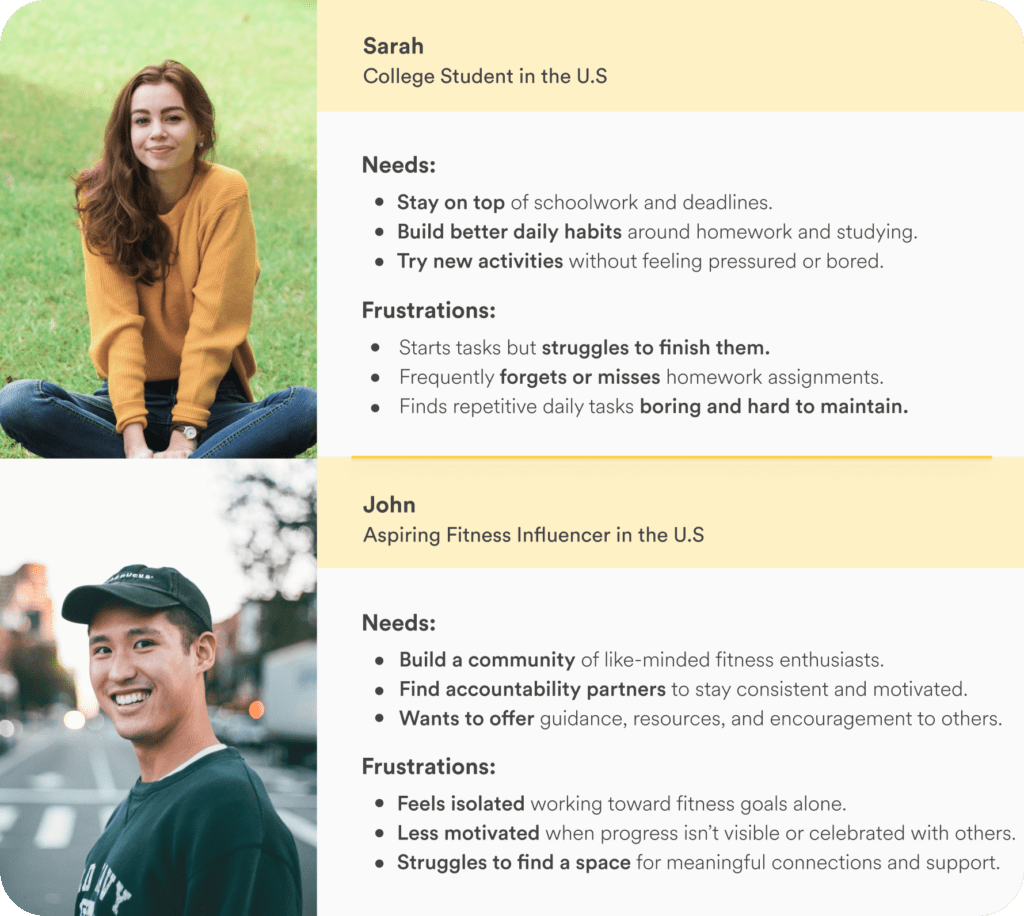
Key takeaways
From our research into user needs and gaps within the current product, we identified two primary goals to guide our design direction:
Motivation to complete tasks and reach personal goals:
• Design Implications: To make task completion more engaging, we integrated gamification elements such as streaks, collectible rewards, and leaderboards. Additionally, we designed an accountability partner system, where users can take on leadership roles, set group goals, and support each other’s progress.
Access to support and resources when facing challenges:
• Design Implications: We explored partnerships with trusted influencers and mentors to provide users with accessible guidance, curated resources, and motivational content when they encounter difficulties.
Design Process
Ideation
Based on the evidence gathered from user research, we began exploring a wide range of potential solutions. At this stage, our focus was on generating ideas freely and considering possibilities from multiple angles, without being limited by technical constraints.
We then organized our ideas into groups, each one tackled different concerns from different angles. Eventually, we settled on the following core features:
Sketches
I quickly drew out sketches with different variations with the team and list out their potential features.
• As I began sketching ideas for the gamification system, my goal was to make progress feel both visible and rewarding. We wanted to give users a way to visualize their progress and feel rewarded for small, everyday efforts. This led to the idea of integrating a streak system to help users build and maintain momentum. I then designed it to track consecutive days of completing a goal, using simple visual cues like day counters and icons.
• Another gamification feature we were considering from our brainstorming session was the achievement system. This feature utilizes the visual display of badges or awards to provide users a tangible sense of accomplishment, making their growth feel real and rewarding. This helps combat the common drop in motivation that occurs during long-term goal pursuit. With this concept in mind, I began sketching ideas for how the achievement board would appear on the user’s profile page, a section our team like referred to as the personal trophy “display shelf.”
Low fidelity and Draft variations
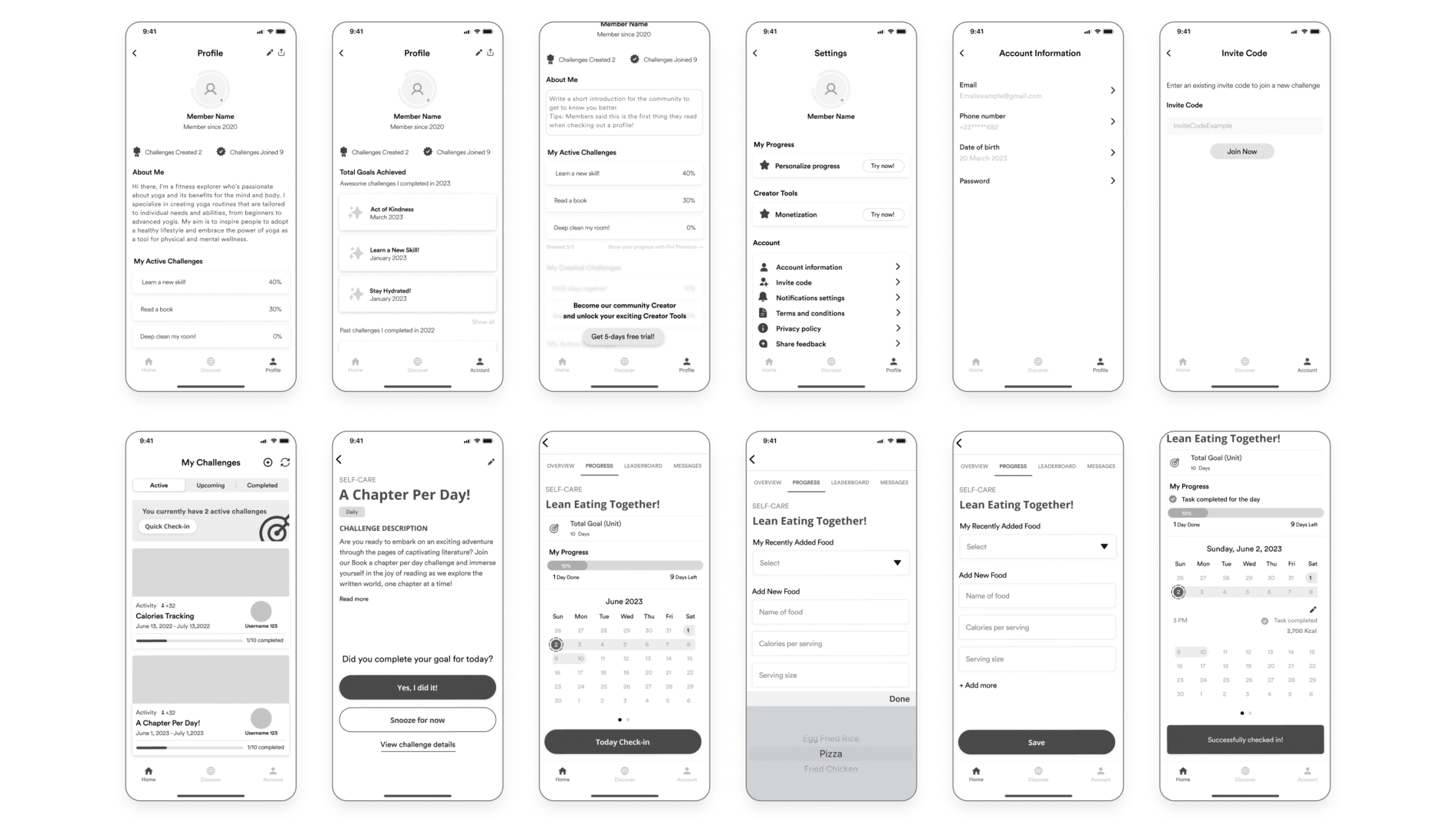
After that, I created wireframes for the key screens to represent the core concepts of each variations.
• Having consulting with the engineering team, we recognized that different types of goals require different methods of tracking progress. Activities such as walking or exercising can be automatically monitored using data from a user’s device, so we decided to implement an auto-syncing system. This approach offered a smoother, more accurate experience and reduced the need for users to log progress manually. To maintain transparency and control, the system only activates with user consent to sync data from their phone.
• At the same time, we wanted to make sure the experience remained reliable even when syncing wasn’t possible such as when users were offline or their data didn’t record correctly. To address this, I designed a ‘Sync Your Progress’ button that allows users to manually refresh or update their progress whenever needed.
• However, not all goals can or should be tracked automatically. Activities like reading, studying, or learning a new skill are more personal and varied in pace. Through market research, I found that these tasks benefit from a manual input system, where users can reflect on their progress and record it themselves.
Testing and user feedback
Through our team critique sessions with both the engineering team and potential users, we collected valuable feedback on usability and design preferences, which helped us understand what resonated most and where improvements were needed before moving forward.
How we iterate
• After reviewing feedback from 18 users, we noticed that people were highly motivated by the idea of tracking their goals and expressed interest in the streak and achievement gamification system that reinforced their progress. This was encouraging to us since these interactive incentives were central to our design strategy for motivating users to achieve their goals.
• However, some users struggled with the manual check-in process. They found that logging progress involved too many steps, which became tiring especially when managing multiple activities. To improve the experience, I redesigned the manual input flow and added a Quick Check-In button directly on the home screen. This feature allows users to update their progress in just one tap, making daily tracking faster and more intuitive.
Information Architect
Having the wireframe ready, each of our team members then came up with their own version of the information architecture individually before meeting up as a team to decide on this unified structure for the final design:
Conclusion
What did I learn
Leadership Roles: Through conversations with my manager, I learned that great designers go beyond creating good designs they influence, inspire, and help others reach their goals. Strong design leadership means empowering teammates to leverage their strengths and contribute meaningfully to the product.
• At Fini, I worked to bridge the gap between business, engineering, and design, ensuring each perspective played a role in shaping the final experience. Moving forward, I aim to continue learning from experienced design leaders and keep developing my ability to lead through collaboration and influence.
• Present Final Product: At the end of my internship, I presented my work to the company’s CEO. To prepare, I invited all of my colleagues who have worked on this project including engineers, designers, UX managers, and senior product managers to review and critique my presentation. Their feedback helped me understand what different audiences value and how to tailor my story to their perspectives. After several iterations, the final presentation was well-received by both the leadership team and the broader audience.
This experience taught me that designing presentations and communication is much like designing a product it’s about understanding your users, identifying what they care about, gathering feedback, and iterating to improve. This mindset aligns closely with what I’ve learned as both an UX and graphic designer. Moving forward, I plan to continue leveraging my communication skills to share my design work more effectively and connect with a wider audience.
What I could have done differently
Asking for progress feedback: Throughout the project, Nick and I made a habit of reflecting after every activity we led and asking our managers to review our survey scripts and testing session. Still, looking back, I realize we could have taken feedback a step further. If we had invited senior designers to join our user interviews and testing sessions we might have received more direct input on our facilitation skills and how to make those sessions even stronger. This experience taught me that feedback shouldn’t just happen after the work is done, it’s most valuable when it’s part of the process. As I continue growing as a designer, I’ll make a conscious effort to seek feedback not only on my designs but also on how I lead, communicate, and collaborate.
Reach out to other teams: When I first joined Fini, our UX design team was small and tight-knit. I quickly found myself having one-on-one conversations with my teammates and managers, learning about design processes, career paths, and how to grow as a designer. Those moments were incredibly valuable. However, I didn’t connect as much with members from other teams at first, I hesitated because I didn’t want to “bother” them. Looking back, I wish I had started those conversations them. If I had more time, I would’ve made a conscious effort to connect with more people across teams not just to learn from them, but to build genuine relationships through shared curiosity and creativity.